Filter, coil and condensate cleaning for commercial air conditioning, with mechanical work delivered through our accredited partners.
Cleaned, tested and certificated to BESA TR19
Photographic evidence filed with every job
A named engineer replies within 24 hours
Request your free survey
BESA TR19 & TR19 GreaseBESCA Vent Hygiene AssociatePart of Gemini AMPM · est. 19970330 043 0080 · 24/7
Air conditioning is the plant occupants notice the moment it stops working, and quietly depend on every other day of the year. It also shares its filters, coils and air path with the ventilation system we already clean and certificate, which is where we come in.
We are straight about how this is delivered. Clean Ducts carries out the cleaning and hygiene side of air conditioning in house. The mechanical and refrigerant work is delivered through our accredited subcontract partners, who hold the F-Gas qualifications that work requires. You deal with one contract and one point of accountability, and the certificated work is done by people certificated to do it.
What we do ourselves: the cleaning side
This is the part that overlaps directly with duct hygiene, and it is the part most maintenance regimes neglect.
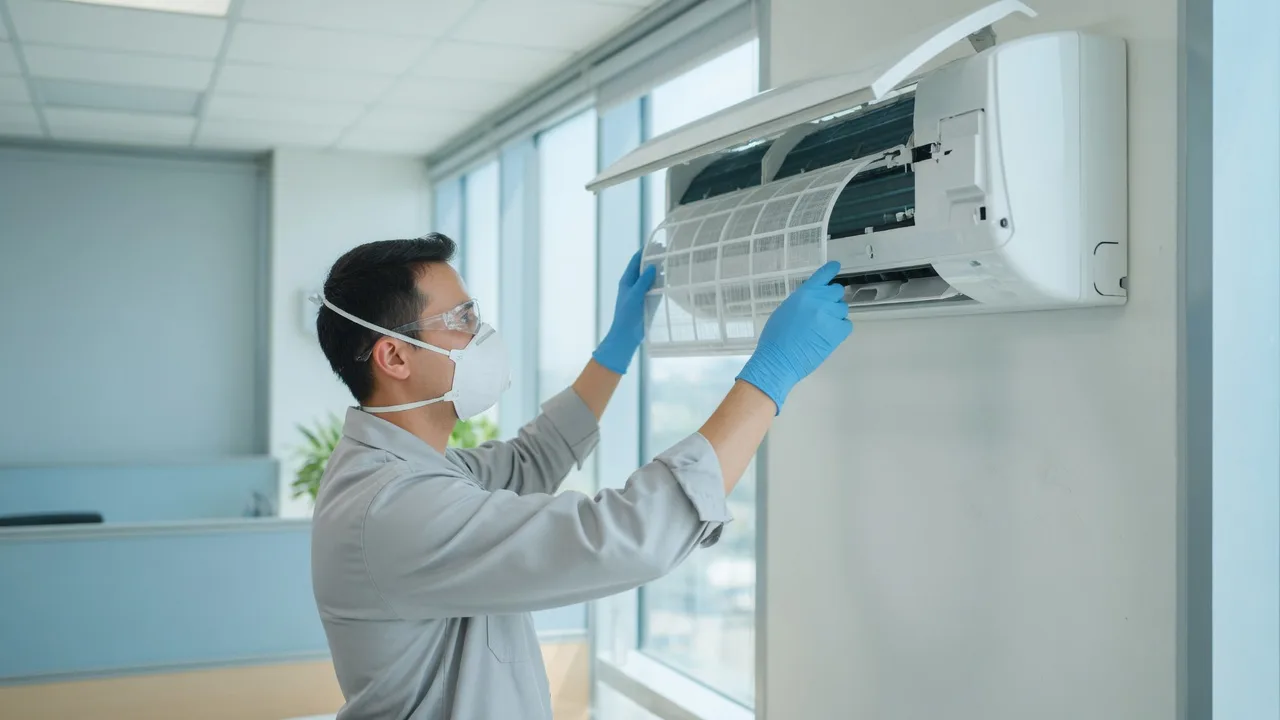
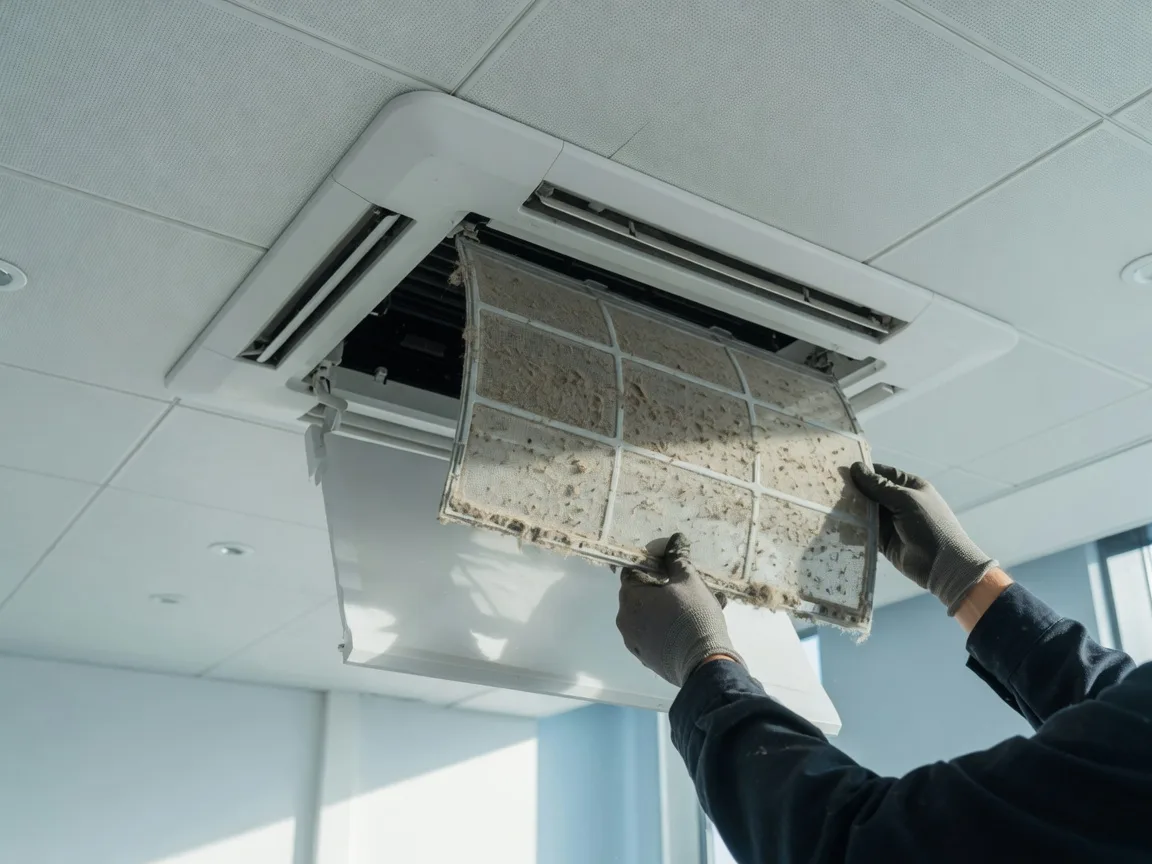
Filter cleaning and replacement. A clogged filter restricts airflow, forces the system to work harder and pushes dust back into the occupied space.
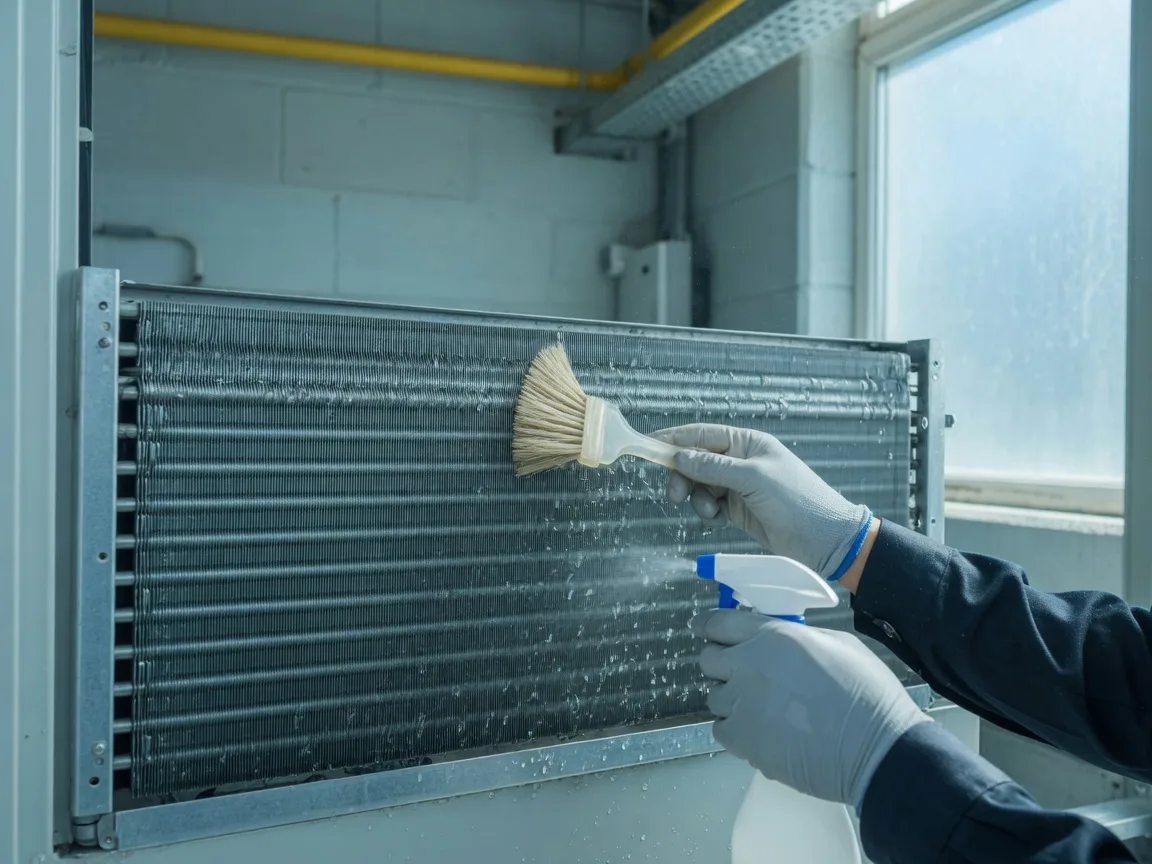
Coil cleaning. Evaporator and condenser coils lose capacity as they foul. Cleaning them restores performance and cuts running cost.
Condensate management. Blocked drains and standing water in trays are among the most common causes of both water damage and microbial growth.
Air-side hygiene and condition reporting. Grilles, diffusers and the surrounding air path cleaned and recorded, with anything mechanical that looks wrong flagged for the engineer who can act on it.
Every visit is documented, so you hold a record of what was checked, what was found and what was done about it.
What our partners deliver
Anything requiring refrigerant handling or F-Gas certification is carried out by our accredited mechanical partners, coordinated by us:
Heat load assessment and system design
Supply and installation of split, multi-split and VRF systems
Replacement and upgrade of ageing plant, including systems running on withdrawn refrigerants
Refrigerant handling, leak checking and repairs
Controls, zoning, commissioning and handover documentation
Where filters and coils meet air quality
A fouled coil is not only an efficiency problem, it is an air quality problem. Cooling coils run wet, and a dirty coil sitting in moving air gives microbial growth somewhere to establish and a route to distribute through the space.
This is the same reasoning that sits behind BESA TR19 duct hygiene, applied to the plant at the end of the duct. Because we clean and certificate the ductwork as well, one contractor stays accountable for the whole air path, instead of a freshly cleaned duct feeding a neglected coil.
The compliance you need to know about
Two legal duties sit on most commercial air conditioning. Both fall on the person controlling the system rather than the contractor, so it is worth knowing where you stand. We do not hold F-Gas certification ourselves, and we do not carry out TM44 assessments. We coordinate both through accredited partners and assessors, and keep the resulting records with your hygiene documentation.
F-Gas leak checking. Under the GB F-gas regulations, systems are leak checked at intervals set by refrigerant charge measured in tonnes of CO2 equivalent: at least every 12 months from 5 tonnes, every 6 months from 50 tonnes, and every 3 months from 500 tonnes, where automatic leak detection also becomes mandatory. Fitting automatic leak detection doubles the permitted interval. Records must be kept for at least five years and produced on request, covering refrigerant quantities, check dates and results, who carried out the work, and any repairs made. This work must be done by an F-Gas certificated engineer.
TM44 inspections. Under the Energy Performance of Buildings (England and Wales) Regulations 2012, air conditioning with an effective rated output above 12kW must be inspected at least every five years by an accredited energy assessor, with the report lodged. The threshold is assessed across the building, so several smaller units can take you over 12kW even where no single unit does. Holding no current report risks a fine that can be repeated until it is put right.
Recent air conditioning work
Work delivered across the group includes Equans at Becket House, and The Body Shop. Full case studies for both are being written up.
Frequently asked questions
Do you handle F-Gas and refrigerant work yourselves?
No, and we are straight about that. Clean Ducts carries out the cleaning and hygiene side of air conditioning in house: filters, coils, condensate and the surrounding air path. Anything involving refrigerant handling, leak repairs, installation or system design is delivered through our accredited subcontract partners, who hold the F-Gas certification that work legally requires. You still deal with one contract and one point of accountability, and we keep the partner paperwork together with your hygiene documentation, so the whole record sits in one place.
How much does commercial air conditioning cleaning cost?
There is no standard price, because no two systems present the same job. The main factors are the size and number of units, how heavily fouled the filters, coils and condensate trays are, how easy the plant is to reach, and whether we need to work outside your operating hours to avoid disrupting the building. That is why we start with a free survey: we inspect the plant, agree the scope, and give you a fixed quote before any work begins, so the price you accept is the price you pay.
How often should air conditioning filters and coils be cleaned?
It depends on the environment the system serves. Plant in a dusty workshop or a busy public building fouls faster than plant in a quiet office, so frequency should follow condition rather than the calendar. What the law asks of you, under Regulation 5 of the Workplace (Health, Safety and Welfare) Regulations 1992, is that mechanical ventilation is maintained in an efficient state and in working order. Regular inspection with documented cleaning is how you evidence that. A survey establishes the condition of your plant now, and a sensible interval follows from what we find.
Does dirty air conditioning affect indoor air quality?
Yes, directly. Cooling coils run wet, and a fouled coil sitting in moving air gives microbial growth somewhere to establish and a route to spread through the occupied space. A clogged filter pushes dust back into circulation and forces the system to work harder at the same time. This is the same reasoning that sits behind BESA TR19 duct hygiene, applied to the plant at the end of the duct, which is why we treat ductwork cleaning and air conditioning hygiene as one air path rather than two separate jobs.
What is a TM44 inspection and do I need one?
TM44 is the air conditioning inspection required under the Energy Performance of Buildings (England and Wales) Regulations 2012. If your system has an effective rated output above 12kW, it must be inspected at least every five years by an accredited energy assessor and the report lodged. The threshold is assessed across the building, so several smaller units can take you over it even where no single unit does. We do not carry out TM44 assessments ourselves: we coordinate them through accredited assessors and keep the report alongside your other compliance records.
How often does my system need an F-Gas leak check?
The interval is set by the refrigerant charge, measured in tonnes of CO2 equivalent: at least every 12 months from 5 tonnes, every 6 months from 50 tonnes, and every 3 months from 500 tonnes, where automatic leak detection also becomes mandatory. Fitting automatic detection doubles the permitted interval. The checks must be carried out by an F-Gas certificated engineer, which for us means our accredited partners, and the records must be kept for at least five years and produced on request. If you have inherited plant with no leak check history, that is exactly what a survey is for.
Do you clean air handling units as well as air conditioning?
Yes. The same team that handles filters, coils and condensate on your air conditioning also delivers air handling unit cleaning, and the two often make sense as a single visit because they share the same air path and the same failure modes. Every visit is documented, so you hold a record of what was checked, what was found and what was done about it, whichever plant it covers.
Start with a survey
If you are taking on a building, inheriting plant with no service history, or holding a system that has never had a documented leak check, start with a survey. We will tell you the condition the plant is in, what the regulations require of you, and what it takes to put it right, including which parts we will handle and which our mechanical partners will.